Combined Urine and Saliva Drug Testing
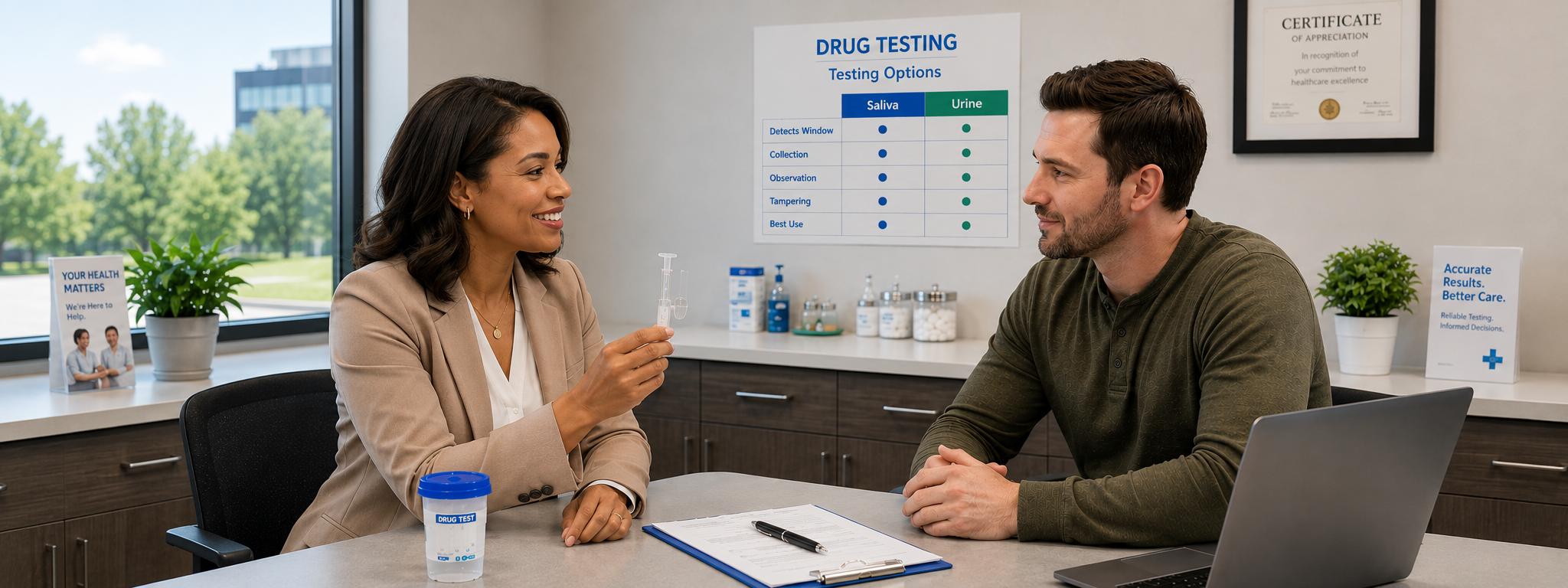
No single drug-testing method is ideal for every situation. Urine and saliva testing each provide different advantages, and some medical offices, treatment programs, and businesses may benefit from using both as part of a carefully designed testing policy.
A combined approach can provide information about recent substance exposure through saliva testing while also using the more established and potentially broader detection window associated with urine testing. The result is a flexible testing program that can better match the purpose and timing of each test.
We offer traditional urine drug testing, rapid urine screening, and saliva drug-testing products, along with professional collection services, and laboratory confirmation pathways to help organizations develop a solution appropriate for their needs.
Why Some Use Both Urine and Saliva Drug Testing?
Urine and oral-fluid specimens do not necessarily provide identical information. They may detect substances over different periods and can involve different collection procedures.
Using both methods may help an organization:
- Evaluate both recent and previous substance exposure
- Reduce reliance on a single specimen type
- Address situations in which one specimen cannot be obtained
- Strengthen monitoring and documentation procedures
- Match the testing method to the reason for the test
- Create a more flexible workplace or clinical testing program
- Provide additional information when a result is unexpected or inconsistent
Combined testing does not automatically make every result conclusive. Each test must still be interpreted according to its purpose, limitations, cutoff levels, collection time, and confirmation requirements.
Understanding the Difference
Saliva Drug Testing
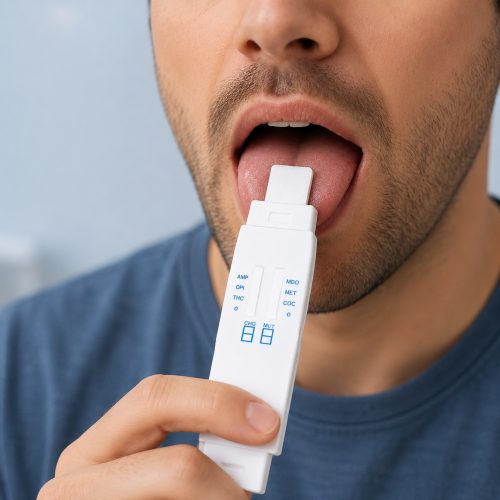
Saliva testing is particularly useful when an organization wants a fast, observed collection that emphasizes more recent drug exposure.
A saliva specimen can generally be collected in approximately 30 to 90 seconds, and some screening options provide preliminary results in about five minutes. Because the collection can be directly observed, saliva testing reduces opportunities for substitution or alteration without requiring restroom monitoring.
Benefits of Saliva Testing
- Fast, non-invasive collection
- Directly observed without restroom use
- Reduced opportunity for specimen substitution
- Useful when recent use is the primary concern
- Convenient for workplace, clinical, mobile, or remote settings
- Rapid preliminary screening options
- Laboratory confirmation pathways available
Oral-fluid testing may be especially useful for post-incident situations because it focuses more closely on recent exposure, while urine may continue to reflect use from an earlier period. Click to learn more about Saliva Drug Testing Options.
Urine Drug Testing
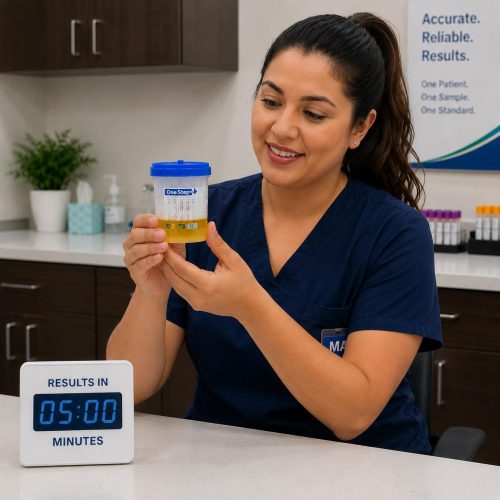
Urine testing is one of the most established and widely recognized drug-screening methods. It may detect drug metabolites for a longer period than saliva testing, depending on the substance, frequency of use, individual metabolism, cutoff level, and other factors.
Urine testing may also offer broader panel configurations and may be required by a specific employer policy, agency, court, treatment program, or regulated testing procedure.
Benefits of Urine Testing
- Familiar and widely established testing method
- Potentially longer detection period
- Broad multi-drug panel options
- Suitable for many employment and clinical monitoring programs
- Rapid screening and laboratory-based options
- Specimen-validity measures may help identify dilution or adulteration
- Secure chain-of-custody procedures can be used when required
We provide professional drug-testing services with certified personnel, secure handling, customized testing programs, and comprehensive reporting.
How the Two Methods Complement Each Other
A helpful way to understand combined testing is that each specimen may provide a different view of potential substance exposure.
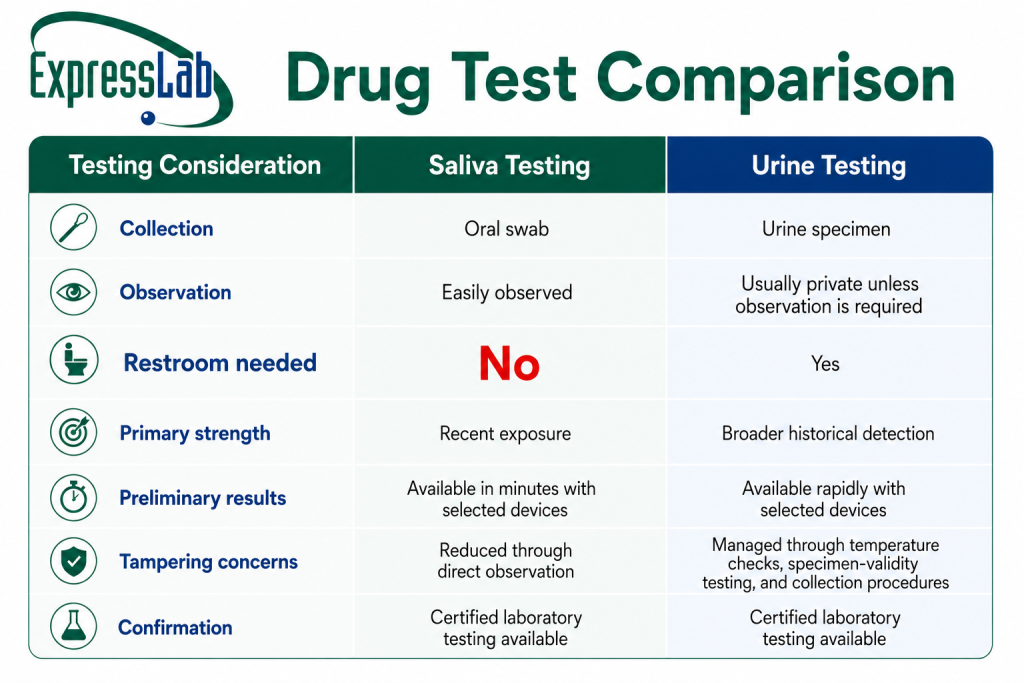
Actual detection periods and available drug panels vary. Neither specimen type, by itself, establishes when a substance was used, how much was used, or whether a person was impaired at a particular time.
Situations Where Combined Testing May Be Helpful
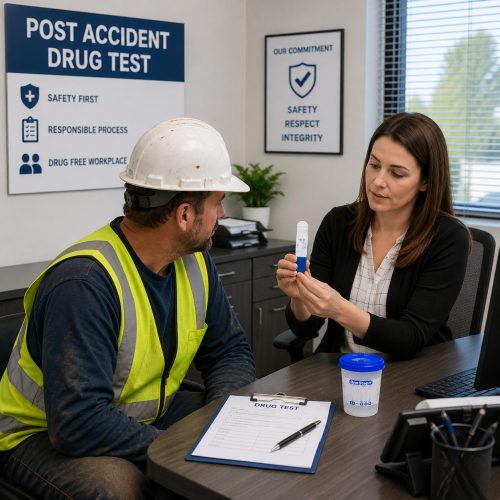
Post Accident/ Post Incident Testing
Timing is often important following a workplace accident or safety event. Saliva testing may help evaluate recent exposure because the sample can be collected quickly and directly observed.
Urine testing may be added when the employer also wants a more established specimen with the potential to identify exposure occurring over a longer period.
Using both may provide complementary information, but results should not be treated as a direct measurement of impairment.
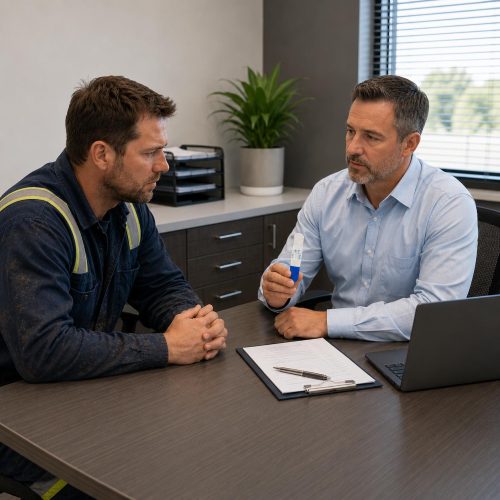
Reasonable-Suspicion Testing
When observable behavior or workplace circumstances lead to reasonable-suspicion testing, rapid saliva collection may help document a specimen close to the time of the event.
A urine specimen may be collected at the same time when required by company policy or when a broader testing window is desired.
Employers should establish written procedures in advance so that testing is conducted consistently and in accordance with applicable laws.
Medication-Compliance Monitoring
Medical practices, pain-management programs, behavioral-health providers, addiction-treatment programs, and other healthcare organizations may use drug testing to help monitor prescribed medications and unexpected substance exposure.
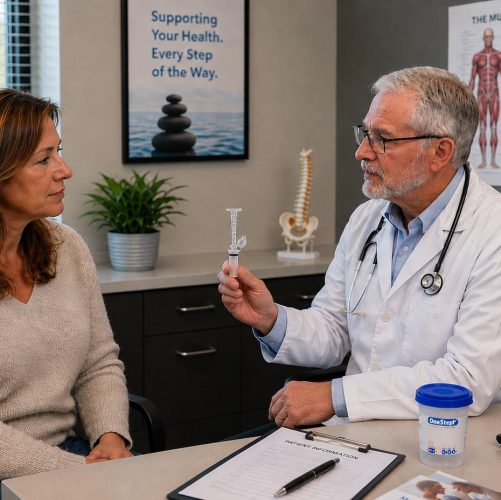
A combined approach may be considered when a provider needs:
- An observed specimen reflecting recent exposure
- A urine specimen with a potentially longer detection period
- Additional information when results do not match the reported medication history
- A documented pathway to certified laboratory confirmation
We support oral-fluid workflows for pain management, behavioral health, addiction treatment, medication-compliance monitoring, primary care, specialty practices, and occupational health programs.
Drug-test findings should always be interpreted in the context of the patient's prescriptions, clinical history, test limitations, and confirmatory results.
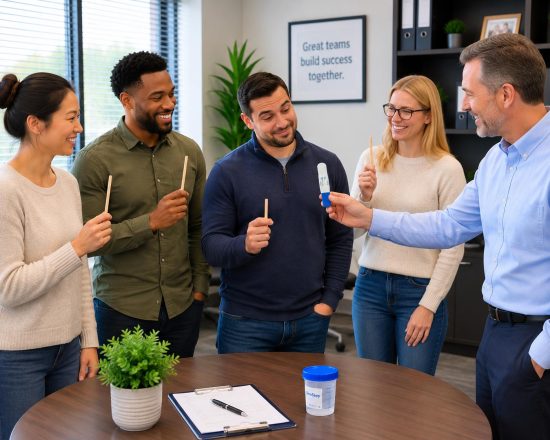
Random Workplace Testing
Saliva testing can simplify random testing because collections are quick, observed, and do not require restroom facilities or same-sex collection personnel.
A business may still choose urine testing periodically or in specified circumstances to maintain consistency with its established policy, expand its testing window, or meet contractual and regulatory requirements.
We offer customized programs, chain-of-custody procedures, and reporting support for employers.
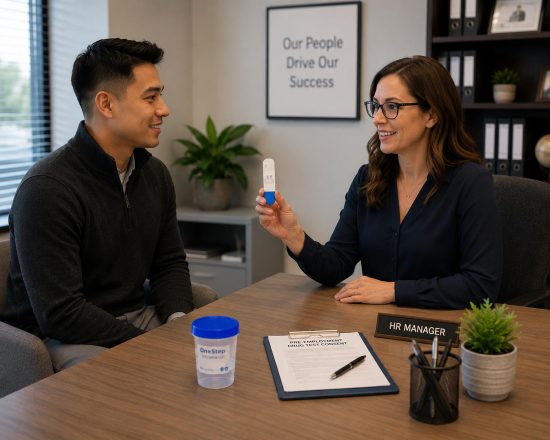
Pre-Employment Testing
Urine testing remains a common choice for pre-employment screening. Saliva testing may be added when an employer wants a convenient, observed collection that places greater emphasis on recent exposure.
Organizations should determine in advance whether both tests will always be used or whether saliva testing will supplement urine testing only for selected positions, safety-sensitive duties, or other defined circumstances.
When a Urine Specimen Cannot Be Collected
Some donors may be temporarily unable to provide an adequate urine specimen. An oral-fluid collection may offer a practical alternative in nonregulated programs, provided that the organization's written policy and applicable requirements permit the substitution.
The decision to change specimen types should not be made inconsistently or only after seeing another test result. Clear written procedures help support fairness and defensibility.
Rapid Screening and Laboratory Confirmation
Both urine and saliva testing may begin with a rapid preliminary screen. A preliminary non-negative result is not the same as a final confirmed positive result.
When required, we can support certified laboratory confirmation and professionally documented reporting. Our oral-fluid programs include confirmation options through laboratory workflows, secure reporting, and chain-of-custody documentation.
Confirmation testing is especially important when results may affect:
- Employment decisions
- Medical treatment
- Legal proceedings
- Workplace discipline
- Return-to-duty status
- Medication management
- Participation in a treatment program
A Medical Review Officer may also be appropriate or required for certain employment-testing programs.
Create the Right Testing Program for You
Combined urine and saliva testing is not necessary for every organization or every testing event. Call us at 208-529-8330 so we can help your organization develop the right drug-testing approach that supports your needs.